“We want neither money nor weapons; just recognise the Iranian people’s right to struggle.”
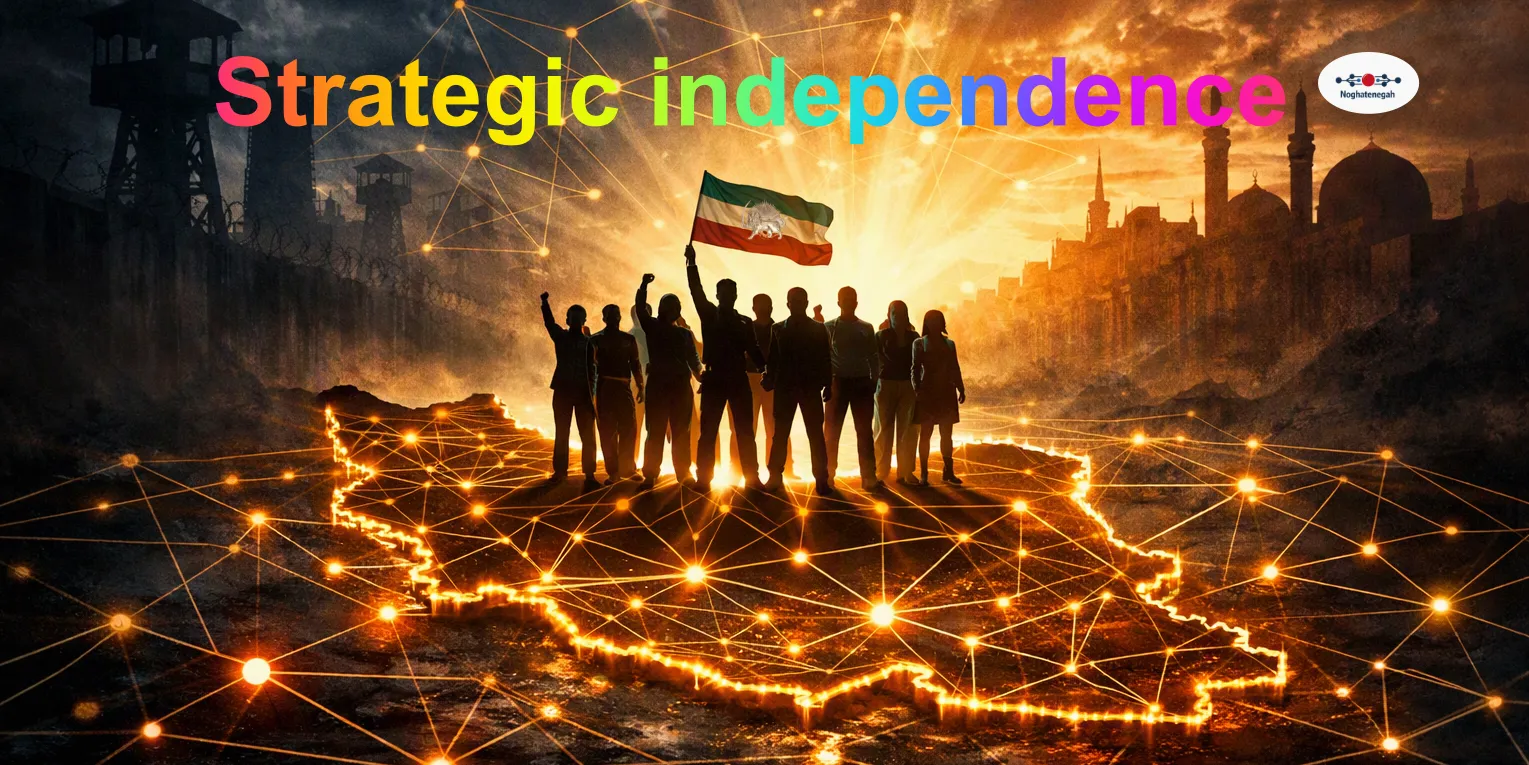
The topic of Strategic Independence in Iran has been a pivotal political concept for five decades.
This slogan and principle has resonated across Iran’s political landscape for five decades. But where does the true foundation of this resistance lie? What sets this movement apart from claimants who rely on sanctions, foreign intervention, and opaque funding?
Today, we ask without bias: Over the past 50 years, who has truly paid the price on the ground and maintained their independence, and who has undermined progress through dependency and short-lived political projects?
Censorship and the Illusion of Mainstream Media
When examining the Iranian political struggle free from media spin, a multi-layered reality emerges—one that heavily funded media outlets with massive budgets have long sought to distort with artificial narratives. On one side stands the repressive regime apparatus; on the other, nostalgic movements and manufactured oppositions that rise with media waves only to collapse without achieving lasting results. But what is truly happening on the ground?
The Two Pillars of the Struggle in Iran
Understanding the struggle requires recognising the key forces actively operating on the ground:
Iran’s Nationalities and Ethnic Communities: From Kurdistan and Baluchistan to Khuzestan and Azerbaijan, these communities have borne a heavy burden of discrimination and repression, serving as vital catalysts for regional resistance.
Nationwide Network of Resistance Units: The defining characteristic of these units is their cellular, decentralised, and borderless structure. Spanning from north to south and east to west, they target key centres of repression to shatter the barrier of fear.
The Media Paradox and Selective Coverage
We face a major paradox: Why do mainstream media outlets focus heavily on unorganised, short-lived initiatives while minimising or ignoring news of Resistance Units and active ground fighters? The reason for these attacks is clear: rigid organisation and security layers are the only way to survive under a harsh intelligence apparatus. The regime’s execution machinery focuses precisely on these active units, not on virtual leaders on social media.
Strategic Independence: The Red Line of Resistance
The primary line of demarcation is defined by strategic independence. The official stance of genuine resistance is clear: “We request no money, no weapons, and no foreign military intervention; our sole demand is the recognition of the Iranian people’s legitimate right to self-defence against tyranny.” This means relying exclusively on domestic strength and maintaining absolute financial independence.
In contrast, dependent opposition groups have alternately advocated for sweeping sanctions affecting citizens’ livelihoods, sought foreign intervention, or relied on non-transparent financial backing.
5 Criteria for a Rational Assessment
To form an objective judgment, we consider these 5 criteria:
Tangible Sacrifice on the Ground: Which movement has consistently faced arrest, imprisonment, and execution inside the country?
Nationwide Reach: Which movement maintains an operational network active across the entire country?
Strategic Independence: Which group relies strictly on the people’s power and asks foreign actors only for political recognition?
Consistency in Principles: Who has stood firm against all forms of dictatorship for five decades?
Organisation and Discipline: Which movement possesses a structure resilient to intelligence infiltration?
Answering these questions clarifies the boundary between “independent struggle” and “media-driven dependency.” At NoghateNegah, our goal is to equip public discourse with rational criteria.
Conclusion and Future Outlook
A review of the past five decades shows that lasting, meaningful change in Iran’s political landscape requires reliance on internal forces and strategic independence. Movements whose legitimacy depends on opaque funding or tailored media campaigns inevitably crumble when external priorities shift. In contrast, strategic independence means accepting real sacrifices on the ground and connecting the struggle to the people’s authentic demands. Through these analyses, NoghateNegah aims to delineate the boundary between short-lived media projects and deep-rooted, independent resistance.
For international reports on human rights, visit Amnesty International