
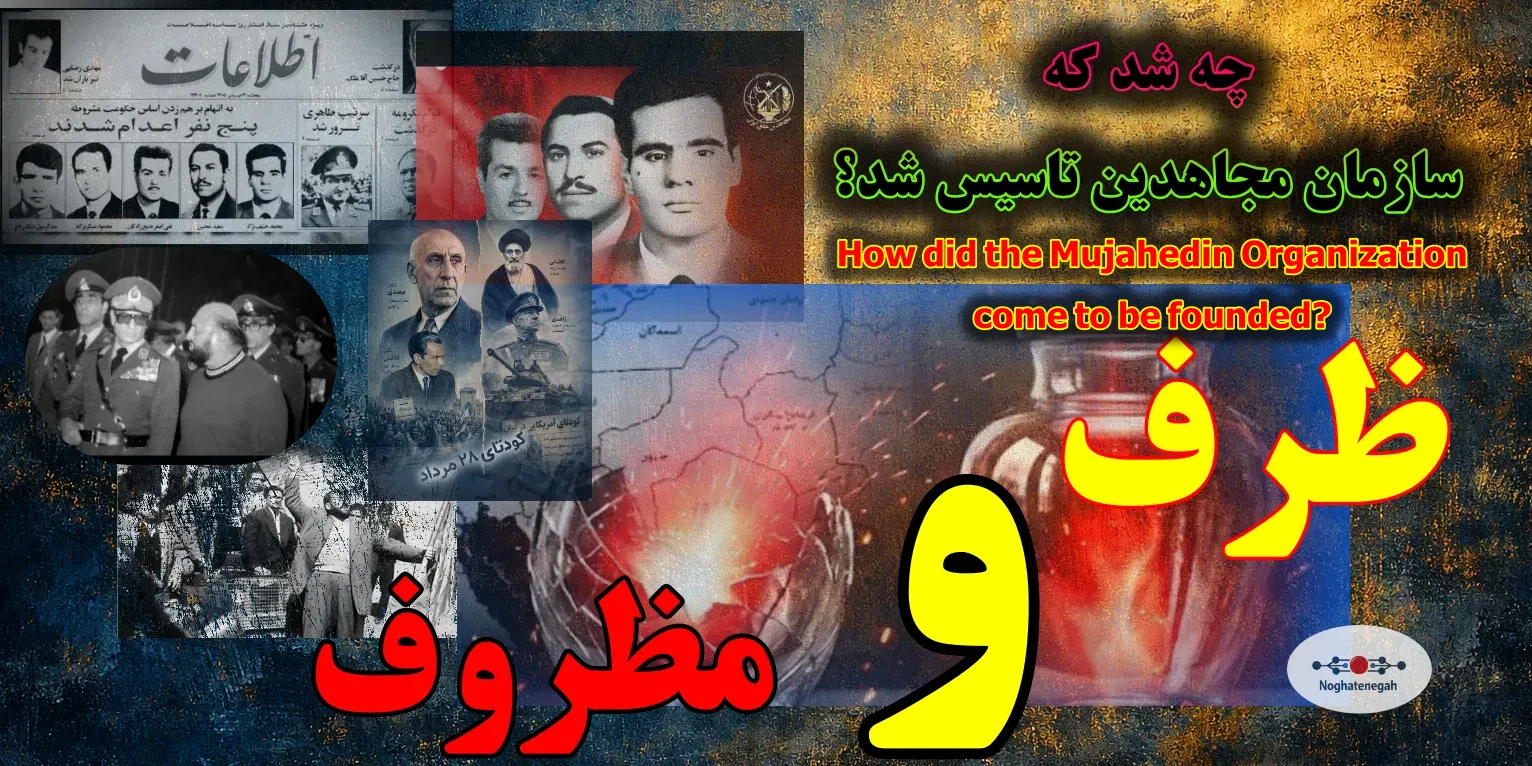
Tracing the Formation of the Mojahedin-e Khalq Organisation: Form and Substance in Contemporary Iranian History
Formation of Mojahedin-e Khalq Organisation
“To understand the reasons behind the establishment of this organisation in 1965, we must look back a decade before the 1953 US-backed coup d’état against Dr Mohammad Mossadegh’s national government. The generation that witnessed the fall of that government learned a bitter historical lesson: a society that struggles but lacks a cohesive, scientific, and structured organisation will inevitably face fragmentation and rapid collapse when confronted with tyranny and foreign intervention.
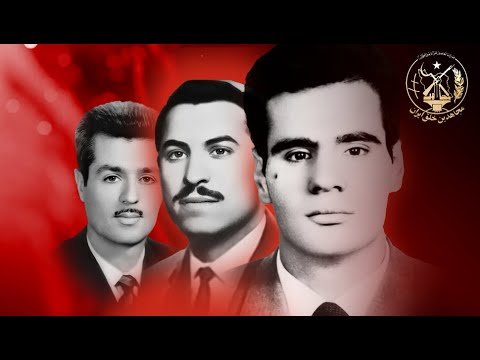
The founders of the organisation—Mohammad Hanifnejad, Saeid Mohsen, and Asghar Badizadegan—arose from this exact historical disillusionment. They arrived at the intellectual realisation that struggle could no longer continue through traditional circles or fleeting emotions. They combined progressive religious thought with modern organisation to address that major vacuum. This was where the first sparks of an ‘organised thought and will’ were formed, ensuring that the bitter experience of the suppression of national achievements would not be repeated—an idea that, to preserve itself, required a structure known as an organisation.
Let us not forget here that the organisation was not created to produce thought and ideas, but rather to safeguard that thought and ideology. The mistake we see and hear from many people precisely lies in this subtle point, which is hidden beneath layers of narratives and hypotheses.
Contemporary political history is full of names and formations, yet few movements have managed to endure for over sixty years. Why? Because behind every material formation flows a “thought and ideology.” Today, we wish to move beyond false propaganda dichotomies and examine what that ideology, born in 1965, was and how it weathered the storms.
From the Mid-1960s Deadlock to the Need for Organisation
Formation of Mojahedin-e Khalq organisation
The mid-1960s represented a complete political deadlock. In such an atmosphere, Hanifnejad and his companions reached a fundamental intellectual insight: struggle is no longer an emotional reaction, but rather a “science and will.” They sought to rescue religion from superstition and passivity, transforming it into a driving engine for justice and freedom (to quote Dr Hezarkhani, who noted that the Mojahedin brushed the dust off religion).
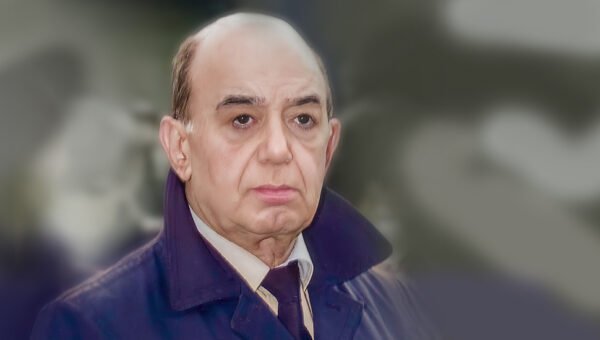
I personally believe that the Mojahedin never intended to propagate religion or encourage or punish anyone for their religious beliefs; rather, my understanding is that wherever religion was mentioned, it served the cause of being revolutionary and was connected to every event and occurrence in the framework of struggle.
Yet why did an organisation become a necessity? It was not an “organisation” that was born first, but rather a “thought and worldview” that needed an organisational vessel to survive in the arena of action.
Severe Storms: From the 1971 Crackdown to the Ideological Deviation Crisis
Formation of Mojahedin-e Khalq organisation
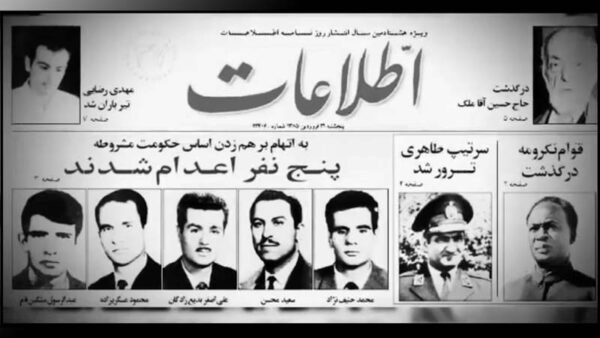
However, this nascent structure was soon confronted by massive storms. In 1971, the Pahlavi security apparatus (SAVAK) dealt a heavy blow to the organisation; its main leaders were arrested, and in 1972, the founders, along with several members of the central cadre, were executed by firing squad. Amidst this, only Massoud Rajavi had his death sentence commuted to life imprisonment through the efforts of his brother, Dr Kazem Rajavi, and international pressure.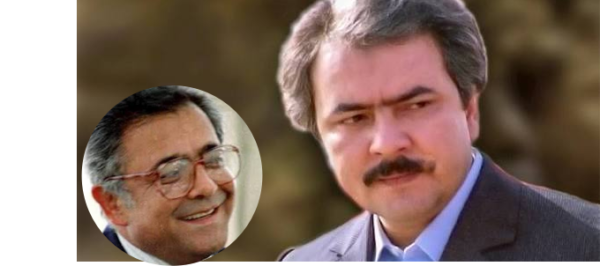
Just as the organisation’s file seemed closed forever, another devastating blow struck from within: the deviation and ideological shift toward Marxism in 1954 [referring to the 1975 opportunistic crisis] (perpetrated by a faction later known as ‘Left-wing Opportunists’). This crisis brought the organisation to the verge of complete collapse and internal purges. The organisation that emerged on the eve of the 1979 Revolution was no longer the simple 1940s formation; rather, it had survived a difficult, bloody, and costly surgery to enter the crucible of revolutionary events with a new shell.
Yet the point is this: the vessel was damaged, but the substance and the will to resist remained. A fresh generation, relying on the authenticity of that initial thought, rose from the ashes of these crises to reach the threshold of the 1979 Revolution; they demonstrated that executions or superficial deviations cannot destroy a deeply rooted ideology.
In the upcoming parts, we will turn to the early years of the 1979 Revolution to further dissect this necessity of establishing and sustaining the organisation. Our goal is not to produce a lengthy documentary, but rather to intelligently distinguish between “form” and “substance” and to raise awareness against layers of distortion, because society’s need today is to understand profound and principled realities.